
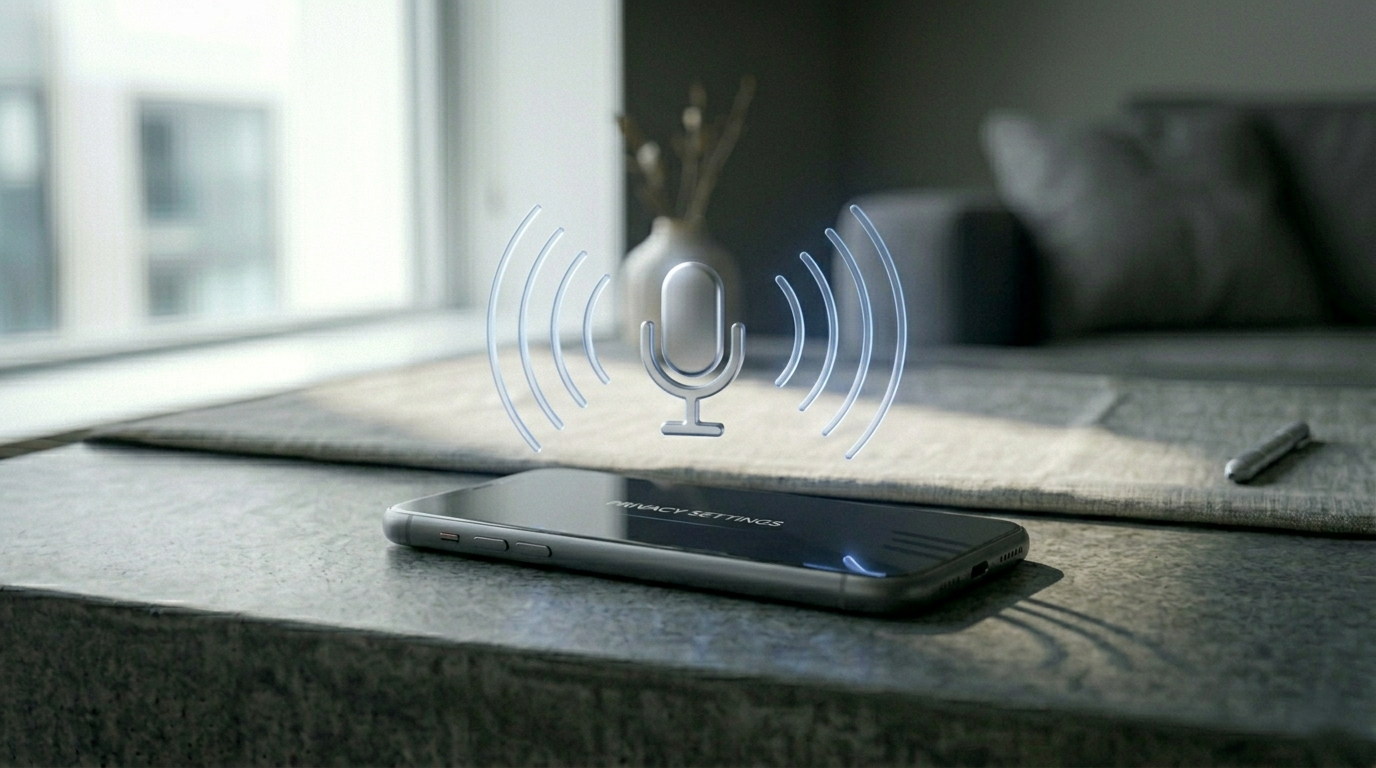
It’s happened to all of us. You’re having a casual conversation with a friend about buying a new espresso machine. You haven’t searched for it on Google. You haven’t typed it into Amazon. But the next time you open Instagram or Facebook, there it is: an ad for a high-end espresso machine.
The immediate, logical conclusion? “My phone is listening to me.”
It is the most pervasive tech conspiracy theory of the modern era. But the reality is that big tech companies are not keeping a “hot mic” to record your daily conversations. Audio processing on that scale would require unimaginable server costs, drain your battery in hours, and violate severe wiretapping laws.
So, how do they do it? The truth is actually much more unnerving: they don’t need to listen to you, because your data is utterly predictable.
Here is the “magic” behind the curtain:
1. Location Proximity (The “Friend” Network): Ad networks track location data constantly. If your phone’s GPS shows that you spent three hours in the same room as your friend, the algorithm links your profiles temporarily. If your friend has been heavily researching espresso machines on their phone for the past week, the network assumes that, by proximity and shared demographics, you might be interested in the same topic. When you finally talk about it out loud, the algorithm has already placed the ad in your queue.
2. Predictive Algorithms and Micro-Behaviors: AI doesn’t just track what you search; it tracks what you do. If you paused your scrolling on a video about coffee beans for just 2.5 seconds longer than usual yesterday, the system flags a micro-interest. Combine that with your past purchase history, and the predictive model can accurately guess your next logical purchase before you even verbalize it.
3. Confirmation Bias: This is the psychological trick that glues it all together. You are bombarded with anywhere from 4,000 to 10,000 advertisements every single day. You ignore 99.9% of them because they are irrelevant (car insurance, shampoo, software). But when you see the one ad that perfectly aligns with a conversation you just had, your brain flags it as an anomaly. You forget the thousands of wrong guesses the algorithm made and fixate on the one terrifyingly accurate hit.
The Verdict
Your smartphone isn’t a spy wiretapping your living room. It is simply a highly efficient data-collection tool that feeds into a mathematical engine. Advertisers aren’t reading your mind or listening to your voice—they are just reading your math.